Chloé Guillaume
At the age of twelve my biology teacher told me that “our brain induces a signal of pleasure when we eat something fat because during prehistory, humans needed to eat a lot of fat to store it and survive long periods of diet”. The prospect that my movements and desires were due to millions of years of evolutionary history completely blew my mind and I have been amazed by the way the brain works ever since. After a bachelor’s degree in biology and physiology, I decided to devote myself to a master’s degree in neuroscience, from the molecular level to psychiatric illnesses. It was at this point that I became interested in the integration of the chemical senses and their influence on our behaviour (undoubtedly also biassed by the fact that food and perfume are at the top of my list of personal interests as the typical French woman that I am). My master’s project at the University of Strasbourg was therefore on the perception of sugar taste in children as part of an fMRI study. But I missed the bench and the wet lab too much, so I decided to do a PhD at Nantes University to investigate synaptic plasticity, and I became an electrophysiologist while studying the role of cholecystokinin in long-term plasticity at the cortico-striatal synapse. I was lucky enough to join Elisa’s lab and thus link two of my favourite brain topics: plasticity and chemical senses. Here at the Galliano’s lab, I’m leading a behavioural study to characterise the role of the dopaminergic network in olfactory behaviour (but I’m never too far away from the patch set-up, if needed). If I am not in the lab I am probably traveling somewhere in Europe, hiking in the Icelandic fjords or dancing all night in Spanish bars. Disclaimer: you should know that in my daily life I use English, French and Italian, so my main language at times might probably be a random mix of them.
Research
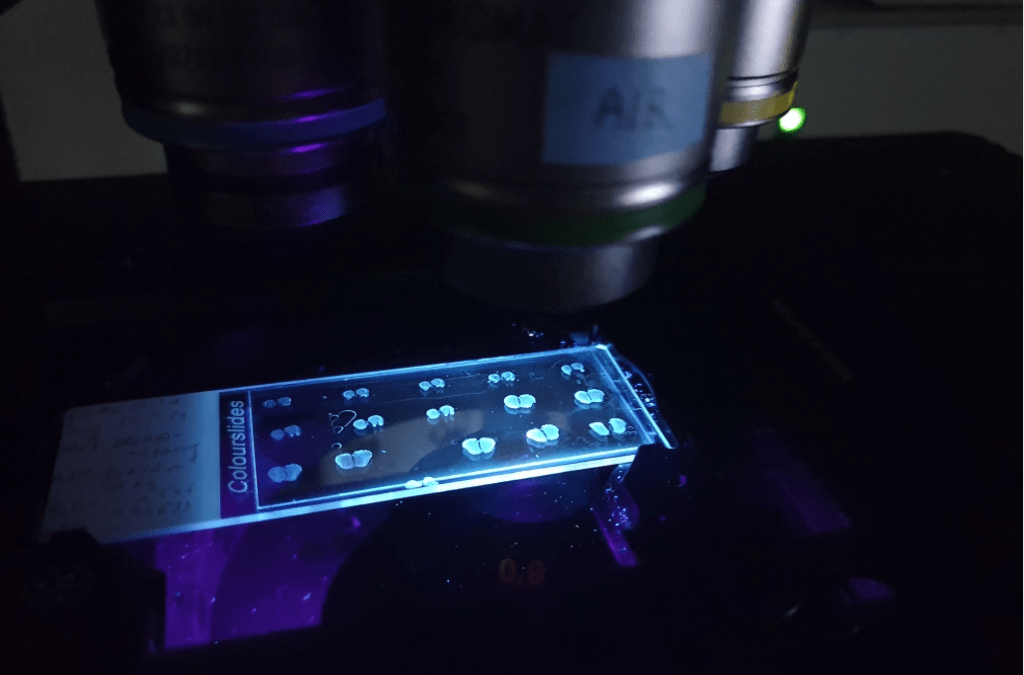
The aim of my project is to uncover how dopaminergic cells impact distinct aspects of olfactory behaviour. By using chemogenetic manipulation I try to manipulate this population and to assess the impact especially in learning and odours discrimination. For that, I use our fully-automated testing apparatus (home made!) to train the mice to perform go/no-go task based on olfactory stimuli in a self-initiated way.
Collaborators:
- Jasper Poort
Open Science
Alongside my postdoctoral work, I’m developing the Cambridge Open Lab project. This local UK hub is part of an international network of Open Labs that originally started with the Nencki Open Lab. The aim is to support early-career neuroscientists by offering high-quality training in open-source tools for experimental design and data analysis, while also creating spaces to explore new ideas, share perspectives, and build community. In practice, we run hands-on training sessions in areas like electronics and optics, as well as a “school of ideas” where we discuss key concepts and theories that shape neuroscience today. This year, we organised two successful workshops on electronics for neuroscience — and more events are on the way.
Collaborators:
- Nencki Open Lab https://nenckiopenlab.org/
Teaching and Outreach
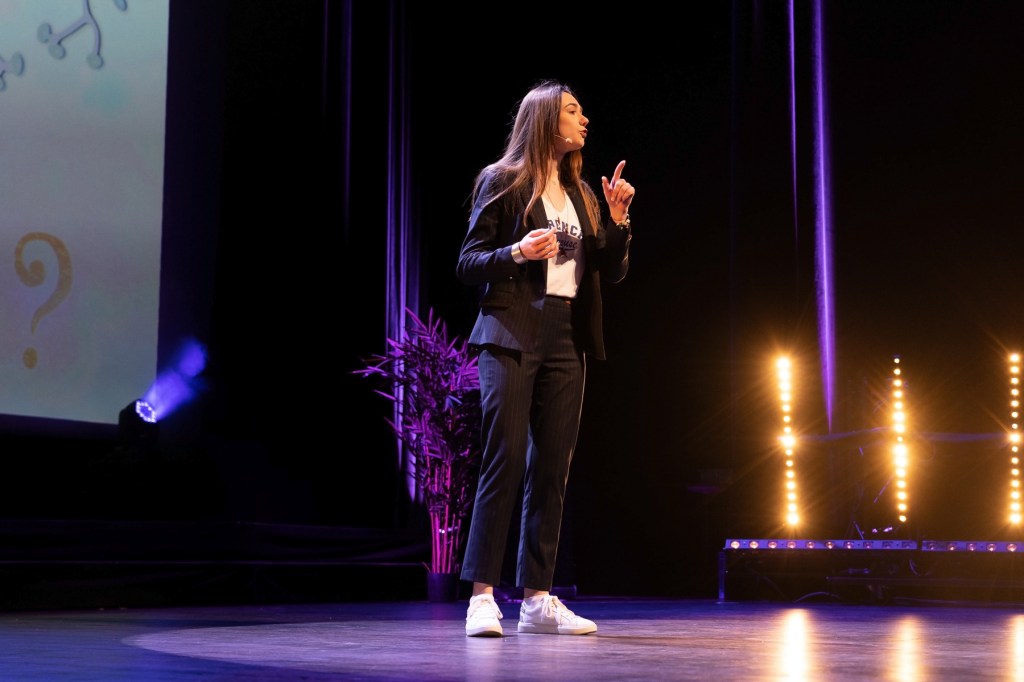
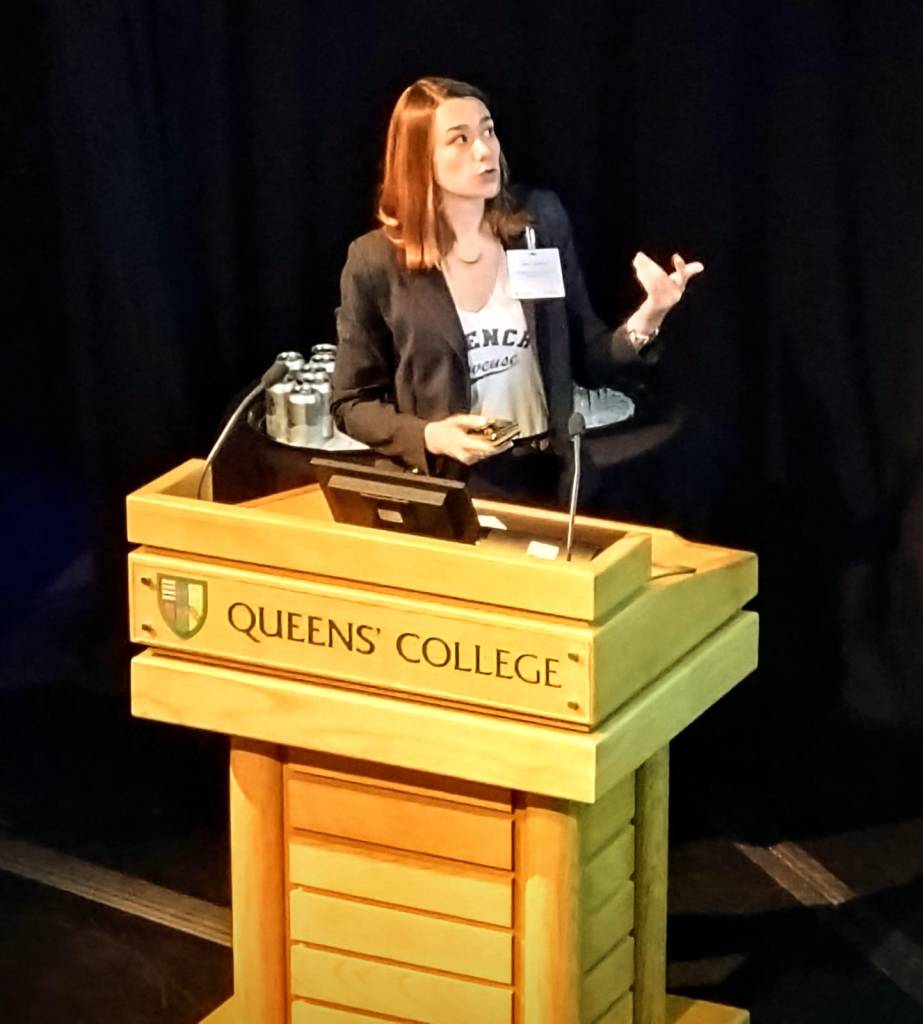
One of the things I find most rewarding is sharing my passion for biology, so I’m always keen to teach and to get involved in public science outreach. During my PhD, I gave numerous lectures in biochemistry and physiology, and led practical neuroscience classes for undergraduates. I’m currently a tutor on the Functional Neuroanatomy life-long learning course run by Cambridge Advanced Online. This year, I also lectured first-year Natural Sciences undergraduates at the University of Cambridge on Comparative Sensory Physiology. Beyond formal teaching, I really enjoy creating small games and interactive activities about the brain for public outreach — and I love a good challenge, like taking part in competitions such as “My Three Minute Thesis”. (watch it here).
Wider Cambridge Community
I am proud to announce that, starting in October 2025, I will be joining Homerton College as a Junior Research Fellow. I look forward to becoming part of this vibrant and dynamic community. Previously, I was a Postdoctoral Research Associate at Darwin College where I contributed to the organization of the Darwin Chalk Talks, and served as a member of the Education & Research Committee for 2 years.
I am also a proud member of Cambridge Neuroscience, this very nice network that brings all together the 800+ neuroscientist of Cambridge during (always fun!) events along the year.
Papers, preprints, datasets, presentations
Guillaume C (2025) Accessible and automated behavioural testing in freely moving mice: open-source tools for multisensory conditioning and odour-driven behaviour. ECRO 2025 – International Conference about Research in Chemosensory Science, Bilbao. Oral presentation
Guillaume C, McWhinnie A, Peedikayil Kurien S, Doyle C, Horvath-Gulacsi E, Galliano E (2025) Modulating the modulators: chemogenetic dissection of bulbar dopaminergic contributions to olfactory behaviour. ECRO 2025 – International Conference about Research in Chemosensory Science, Bilbao. Poster presentation
Doyle C, Wang J, Galliano E, Guillaume C (2025) A low-cost and open-source olfactometer to precisely deliver single odours and odour mixtures. bioRxiv 2025.09.11.675563. preprint. Shared corresponding author.
Guillaume C, Saez M, Parnet P, Reig R, Paille V (2025) Cholecystokinin modulates corticostriatal transmission and plasticity in rodents. eNeuro, ENEURO.0251-24.2025. Shared corresponding author.
Gadiwalla S, Guillaume C, Huang L, White SJB, Basha N, Petersen PH, Galliano E (2025) Ex vivo functional characterization of mouse olfactory bulb projection neurons reveals a heterogenous continuum. eNeuro, 12 (3) ENEURO.0407-24.2025
Paradis J, Guillaume C, Frapin M, Meistermann D, Pagniez A, de Coppet P, Amarger V, Parnet P, Paillé V (2025) Maternal low protein diet alters the development of reward circuits from childhood to adulthood by reshaping its function. bioRxiv 2025.02.28.639479. preprint
Doyle C, Guillaume C (2024) Reactivating an Engram: Context Matters. J Neurosci. 17;44(29):e0650242024. Journal club article
Guillaume C (2024) An automated device designed for olfactory or multisensorial based operant conditioning of freely moving animals and remotely controlled. UK Semio-chemistry Network annual meeting, Cambridge. Oral presentation
Guillaume C, Wang J, Agarwal Y, Poort J, Galliano E (2024) An automated device designed for olfactory or multisensorial based operant conditioning of freely moving animals and remotely controlled. ISOT 2024 – International Conference about Research in Chemosensory Science, Reykjavik. Poster presentation
Gadiwalla S, Guillaume C, Huang L, White SJB, Basha N, Petersen PH, Galliano E (2023) Mitral, tufted, and everything in between: electrophysiological classification of bulbar projection neurons in the mouse. ECRO 2023 – International Conference about Research in Chemosensory Science, Nijmegen. Poster presentation
Guillaume C, Sáez M, Parnet P, Reig R, Paillé V (2022) Cholecystokininergic signalling exerts major control on corticostriatal sunaptic plasticity and motor behavior. FENS Forum – International Neuroscience Conference, Paris. Poster presentation
Guillaume C, Sáez M, Castellano B, Parnet P, Reig R, Paillé V (2022) Cholecystokinin exerts a major control on corticostriatal synapse and motor behavior. bioRxiv 2022.11.28.518143. preprint
Guillaume C, Paillé V (2021) Can excessive food intake be considered an addiction? French Neuroscience Society – La lettre des Neurosiences n°61
Guillaume C, Parnet P, Paillé P (2021) Cholecystokininergic signalling in striatal plasticity. Scientific Days of Nantes University. Oral presentation
Guillaume C, Parnet P, Paillé P (2021) Cholecystokininergic signalling exerts major control on corticostriatal synaptic plasticity. NeuroFrance, Strasbourg. Poster presentation
Guillaume C, (2019) Sugar perception by children – fMRI study. Young Researcher in Cognitive Science’ Days, Ecole Normale Supérieure, Paris. Oral presentation
 Galliano Lab @Cambridge_Uni